 Termites
How Much Does a Termite Inspection Cost in Australia?
If you are looking into termite inspection cost in Australia, the first thing to understand is that the service is shaped by what a technician finds on site. A quote for homeowners comparing timber-pest inspection services should describe the actual work, not simply rely on a broad starting offer.
Two properties can ask for the same service and still need a different inspection, cleaning or treatment plan. Accessibility, existing damage, safety issues, preparation and the desired result all matter. This guide explains what to clarify before booking termite inspection and how to compare the scope of quotes without relying on estimated price figures.
For service details, see termite inspection services. Explain the issue and ask what the initial assessment covers.
Why does termite inspection cost vary in Australia?
The most useful way to understand a quote is to examine the individual tasks required for your property. A provider may need to investigate an issue, select a suitable method, work around access restrictions and explain what is excluded. The factors below are particularly relevant to termite inspection.
Factors that change the work involved
- Size and complexity of the property: A straightforward detached house differs from a multi-level building with decks, additions and outbuildings.
- Accessible inspection areas: Subfloors, roof voids, stored items and wall linings can limit what can be visually inspected.
- Inspection scope and reporting: A timber-pest inspection, invasive investigation, moisture assessment and written report are not necessarily identical services.
- Risk factors and property history: Previous termite activity, damp timber, landscaping and recent renovations may justify closer assessment.
What happens during a professional termite inspection appointment?
The exact method depends on the property, but a sensible service plan begins with a clear description of the issue. Ask whether the provider will assess the site first, what tools or techniques are suitable, and how the completed work will be explained.
Initial assessment
Clarify the building type and purpose of the inspection. Share the location, property type, visible evidence and anything you have already tried. Clear information helps the provider decide whether an onsite inspection is required.
Planning the treatment or service
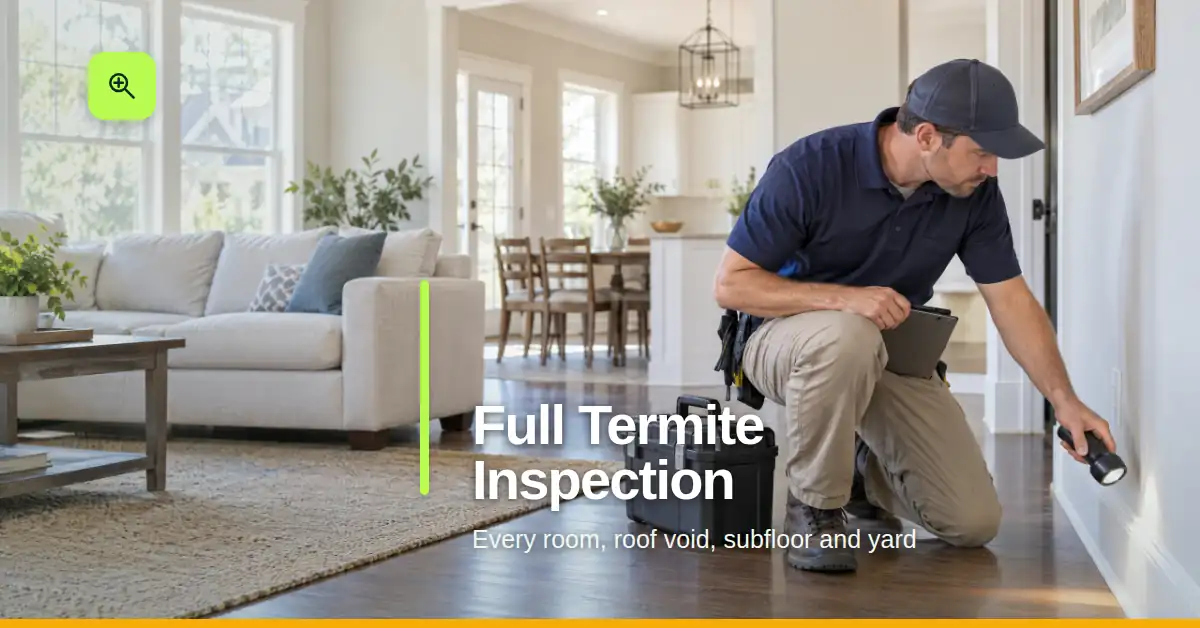
Inspect accessible areas for signs of timber pests and conducive conditions. The provider should describe the intended approach and any conditions that could change it. Raise access limitations, pets, vulnerable occupants or fragile surfaces before work begins.
Completing the agreed scope
Record limitations, observations and recommendations. Work should follow the agreed scope and relevant safety requirements. Ask in advance whether additional tasks will require separate approval.
Aftercare and next steps
Explain whether further investigation or ongoing monitoring is advised. Request a summary of what was completed, what was not possible, and any preventative or follow-up action worth considering.
Why can two similar-looking jobs require different work?
Consider an accessible single-storey dwelling with no known history. Now compare it with a complex house with restricted subfloor, previous termite evidence and extensive decking. Both customers may search for termite inspection, but the inspection, access and methods may differ substantially.
A photograph or phone description is a helpful starting point, but it cannot reveal every hidden condition. A good provider should tell you which assumptions are included and when an onsite review could change the plan. A visual inspection cannot guarantee that concealed termites are absent. Ask for inspection limitations, the report format, any applicable professional standard and whether follow-up or treatment is separate.
What should a clear quote include?
- The exact area or items covered by termite inspection.
- Whether inspection or diagnostic work is included before the main service.
- Preparation you need to complete and any access or parking requirements.
- Safety constraints, material limitations and work that cannot be guaranteed.
- Whether specialist cleaning, disposal, repairs or further treatments are separate.
- The proposed aftercare, written findings and any follow-up arrangements.
How can you prepare before making an enquiry?
Make a short record of the problem and how it developed. Include your suburb, property type, the location of the affected area and any relevant photographs taken safely. Explain previous cleaning, repairs, treatments or attempts to solve the issue.
If access is restricted, describe that rather than attempting unsafe inspection yourself. Share any manufacturer instructions, building-manager requirements or known hazards. This helps the service provider decide what can reasonably be assessed during a visit.
Related services
When arranging termite inspection, it may be helpful to discuss connected problems during the same enquiry. These services address related needs but should not automatically be treated as part of one quote: general pest control; termite inspection enquiries. Confirm the correct service and scope before booking.
What should you avoid assuming?
Do not assume that every provider uses the same method, includes every related task or guarantees the same outcome. A brief online description cannot account for hidden conditions, damaged materials or specialist work that becomes clear only during inspection.
It is also worth checking whether reports, travel, follow-up and disposal or specialist treatment are included. Comparing written inclusions is a better approach than comparing vague service labels.
Frequently asked questions
What affects termite inspection cost in Australia?
Property condition, access, the work required, preparation and any specialist or follow-up tasks are the main variables. Ask for a scope that is specific to your circumstances.
Can I get a termite inspection quote from photographs?
Photos can help a provider understand the issue, but concealed conditions or restricted access may still require an onsite assessment.
Does a termite inspection include termite treatment?
Not automatically. Inspections and treatments are different scopes of work.
Can an inspection find termites behind every wall?
No. Non-invasive inspections have limitations, especially where areas are concealed or inaccessible.
Do I need a written report?
A clear written record of findings, limitations and recommended next steps is useful for maintenance or purchase decisions.
Final thoughts
Understanding termite inspection cost in Australia starts with understanding the service. Clarify what has to be inspected, what can be treated or removed safely, and what the provider expects you to prepare. This gives you a practical way to compare options without relying on unsupported price estimates.
For Freshify Pest Control, the most useful enquiry is one that describes the property accurately and asks for an itemised explanation of the work. This can prevent misunderstandings and make the next steps easier to plan.
Sources and further reading
The sources below provide general safety, maintenance or regulatory context. They do not establish any provider’s prices, and specific service requirements should be confirmed for your property.
- APVMA: Understanding pesticide labels — Why treatment products must be used according to label directions.
- Safe Work Australia: Hazardous chemicals — Safety principles relevant to pest treatments and occupational exposure.
- Australian Government: Your Home — General building moisture, maintenance and property-design information.