
"A ball of bees on my tree or fence"
That is a swarm resting while scout bees look for a new home. It may stay a few hours or a few days. Caught now, it can usually be boxed and rehomed in one visit.
National park swarm in Bangor? Same day service
Swarms from the Royal National Park and the Georges River bushland settling in a tree or moving into a wall. A local technician can be in Bangor in 60 minutes* to remove them and seal the entry.
Royal National Park and Georges River swarms rehomed where access allows.
Get a Bee Removal Quote
Tell us where the bees are. A photo from a safe distance helps.
60 min*
onsite for urgent swarms
Sep–Dec
Sydney's peak swarm season
428
Sydney suburbs covered
24/7
phones answered
Bees in the Sutherland Shire often come from the Royal National Park and the Georges River bushland. A swarm resting near Bangor is usually calm, but bees entering a wall are building a hive. Here is what to do.
Someone stung and struggling to breathe?
Call 000 straight away. Swelling of the face or throat, dizziness or wheezing after a sting can be anaphylaxis, which is a medical emergency.
Bring children and pets inside
Close windows and doors on that side of the house. Turn off the pool pump if bees are drinking from it.
Do not spray, hose or smoke them
Fly spray and water break the cluster apart and make bees defensive. Smoke can push them into a wall cavity.
Do not block a hole bees are using
Sealing the entrance traps them inside the wall. They often chew through plaster and come out inside the house instead.
Take a photo from at least 5 metres away
It helps us tell bees from wasps and plan access before we arrive.
Call us on 07 3544 9883
Swarms move on without warning, often into a nearby roof or wall. The sooner they are collected, the simpler and cheaper the job.
Whatever the location, our technicians specialise in getting bees out and keeping them out, with an upfront price before work starts.
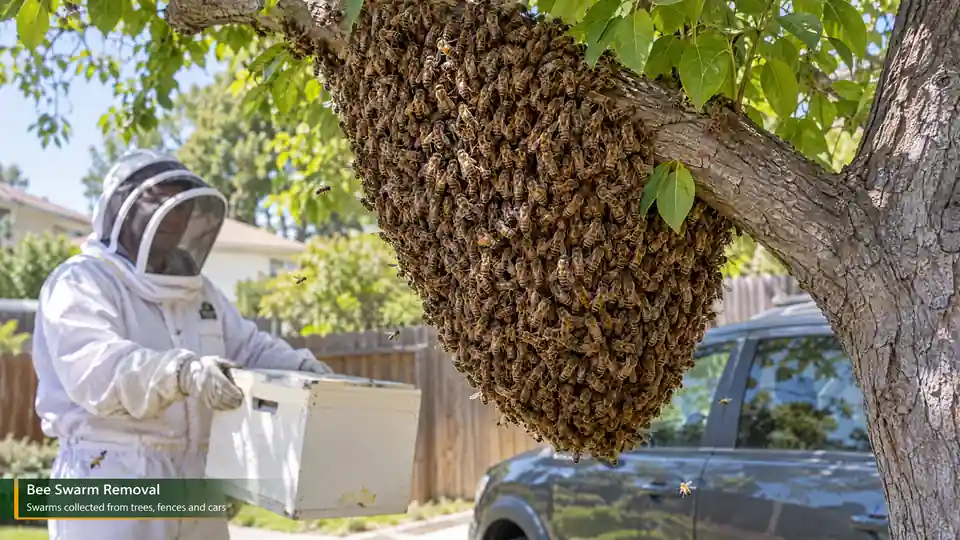 Bee Swarm RemovalSwarms boxed and rehomed where access allows
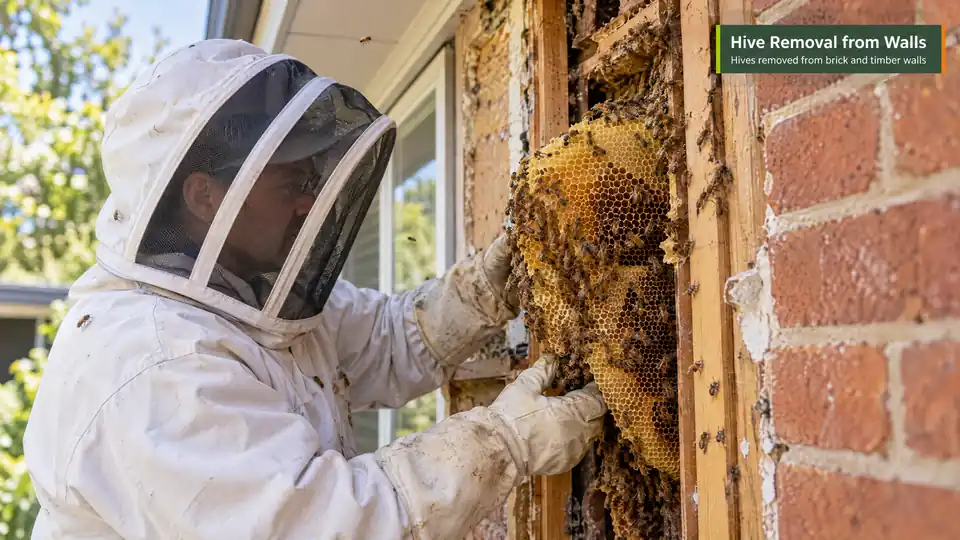 Hive Removal from WallsComb located with thermal imaging and cut out
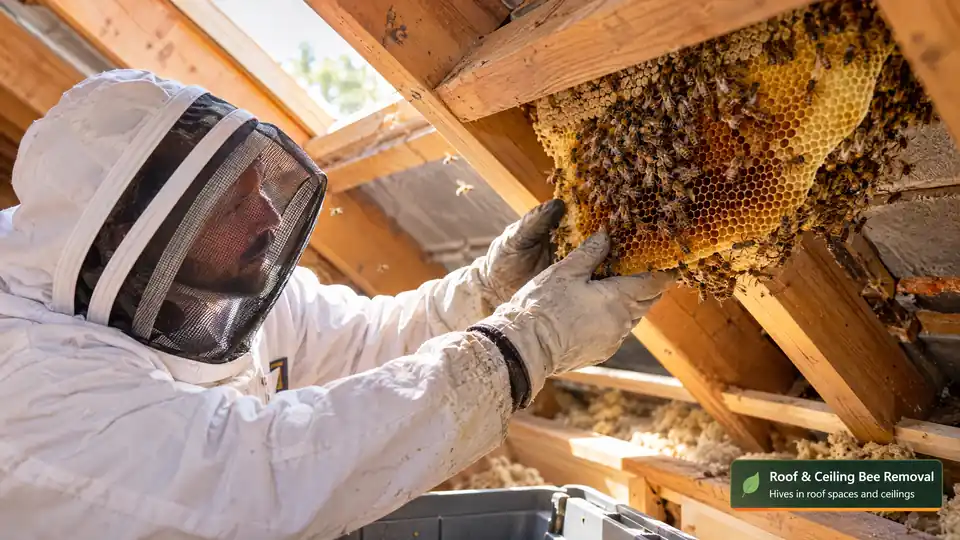 Roof & Ceiling Bee RemovalHives under tiles, in eaves and roof voids
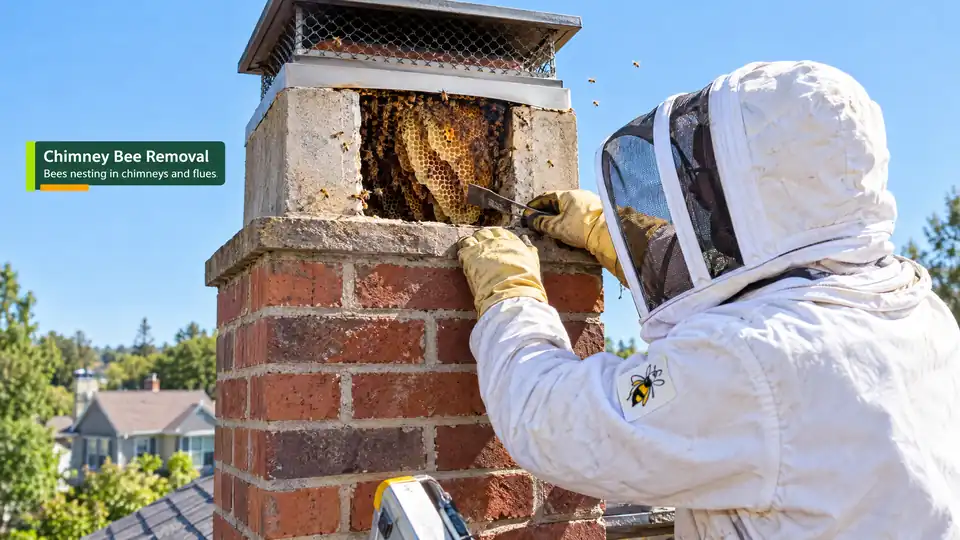 Chimney Bee RemovalFlue cleared and capped against new swarms
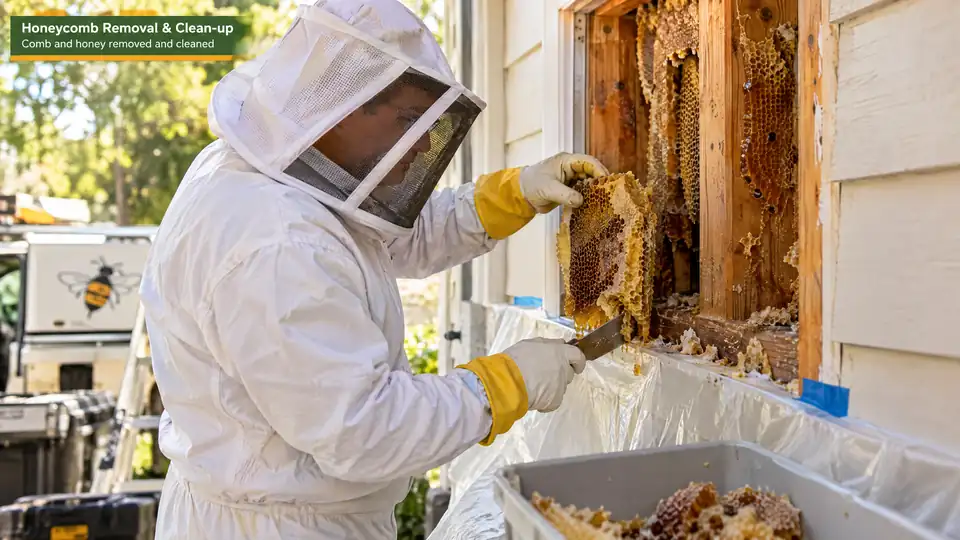 Honeycomb Removal & Clean-upComb, honey and wax cleared from the cavity
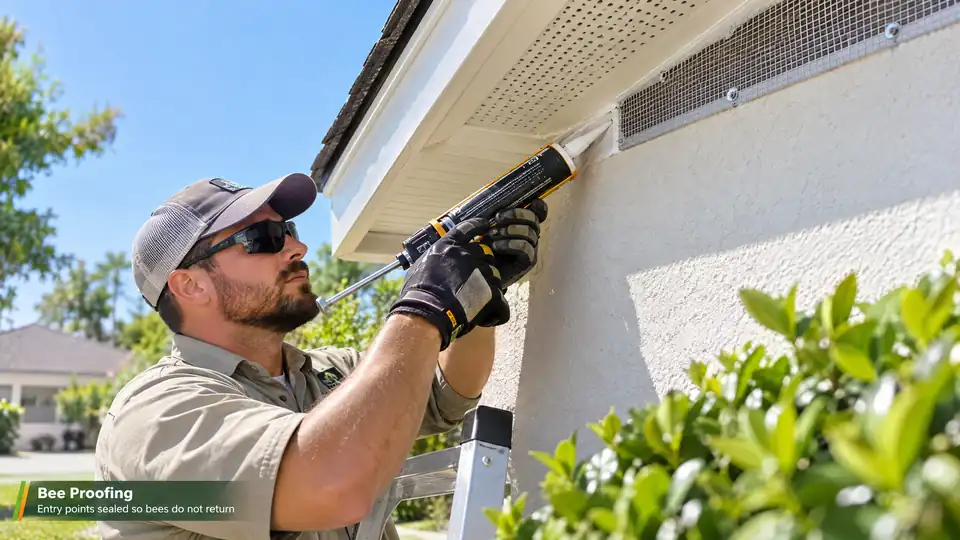 Bee ProofingEntry gaps sealed so scouts cannot return
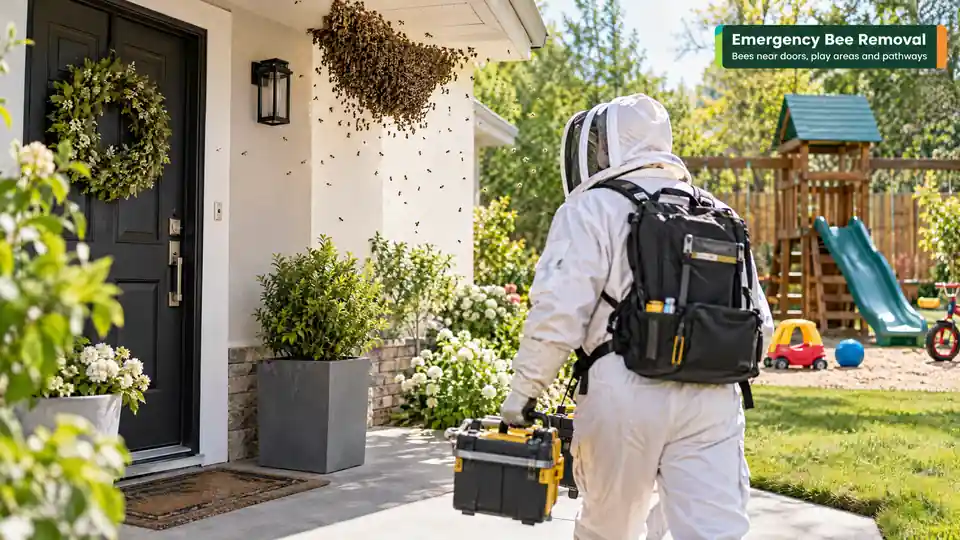 Emergency Bee Removal24/7 for swarms near doors, schools and play areas
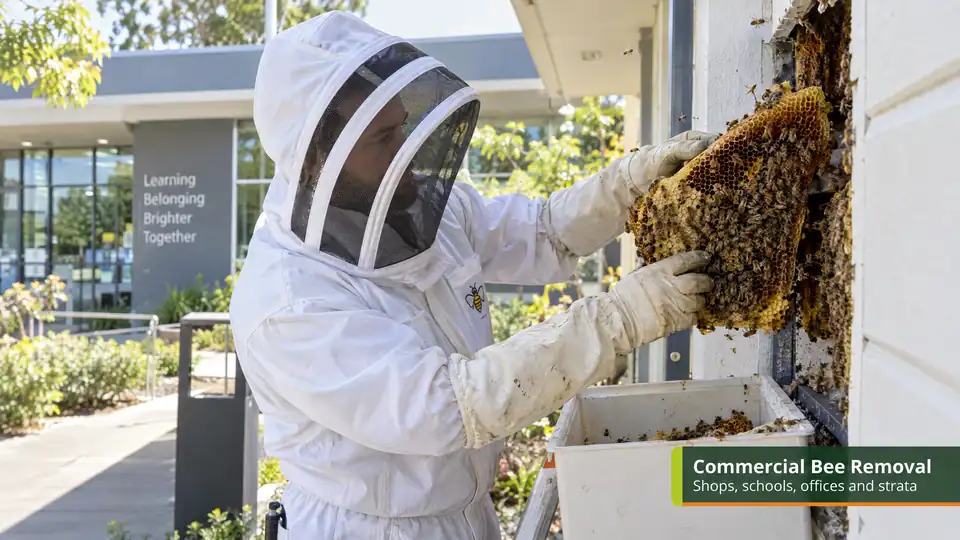 Commercial Bee RemovalShops, cafes, schools, parks and strata sites
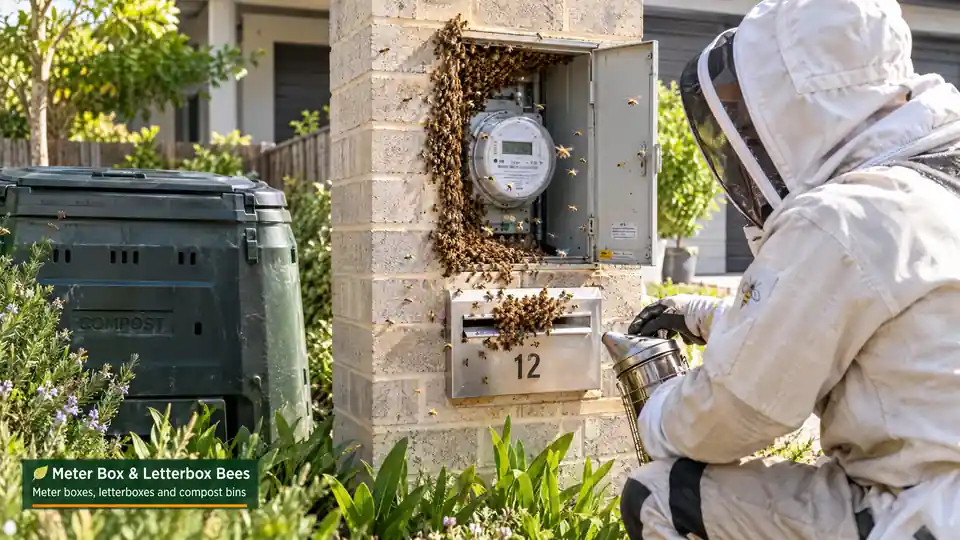 Meter Box & Letterbox BeesSmall-space hives cleared quickly
Where the bees are tells us whether this is a quick swarm collection or a hive that has to be cut out. Find yours below.
That is a swarm resting while scout bees look for a new home. It may stay a few hours or a few days. Caught now, it can usually be boxed and rehomed in one visit.
They have moved into the wall cavity and started building comb. This needs the comb found and removed, not just the bees, or the honey will draw pests and new swarms.
A hive in the roof space or between ceiling joists. Bees finding their way in through downlights and vents is a sign the colony is growing.
Unused chimneys in older Sydney homes are a favourite nesting spot. Do not light a fire to drive them out; melted wax and honey can run down the flue.
Small dry spaces suit a new colony. Meter boxes are a hazard for meter readers and electricians, so these jobs are fitted in fast.
Bees collect water on hot days to cool their hive, which is often within a few hundred metres. We help track the hive down if it is on your property.
Many Sydney callers who say "bees" actually have European wasps, and the treatment is very different. Here is how to tell them apart from a distance.
| Honey bee | European wasp | |
|---|---|---|
| Look | Fuzzy, golden-brown with darker bands | Smooth, shiny, bright yellow and black |
| In flight | Slower, moving from flower to flower | Fast and direct, hovering around food |
| Nest | Wax honeycomb in a cavity, or an open cluster when swarming | Grey papery nest, often underground or in a wall |
| Food | Flowers and water | Meat, sweet drinks, pet food and bins |
| Sting | Stings once, leaves the barb behind | Can sting over and over |
| Peak in Sydney | Spring swarm season, Sep to Dec | Late summer and autumn, Feb to May |
Think it is wasps? See our wasp removal service in Sydney. Not sure? Send us a photo and we will tell you.
Bee swarms in the Sutherland Shire often come from the Royal National Park and the Georges River bushland, settling in wall cavities, roof voids and garden trees.
When Sydney warms up from late August and gardens flower, honey bee colonies grow fast. Once a hive runs short of space, the old queen leaves with up to half the workers to find a new home. That swarm is what lands in your tree, and the next stop is often a roof or wall.
Sandstone walls, double-brick cavities and the eaves of older homes are common hive sites, from inner west terraces to federation homes on the North Shore. Bushland and mature gardens nearby feed large wild colonies.
Sydney also has native stingless bees, often found in gardens, tree hollows and wall cavities on the North Shore and Northern Beaches. They are tiny, black, harmless and worth keeping, so it pays to identify what you have before anything is treated.
Spring brings swarms. Summer brings calls about hives that moved into walls and roofs during spring, often noticed when honey starts leaking in the heat.
A colony in your house does not stay small, and a can of spray rarely ends the problem. Here is what happens next.
A settled colony defends its hive. Multiple stings are painful for anyone and dangerous for people with bee sting allergies, young children and older family members.
A wall hive can hold kilos of honey. On hot Sydney days, or once the bees die, the comb softens and honey seeps through plaster, cornices and ceilings.
Abandoned comb draws ants, cockroaches, rodents and wax moths. Dead bees left in a cavity start to smell. See odour and dead pest removal.
The scent of old wax tells scout bees the spot is a good home. Unless the comb is removed and the gap sealed, the same wall often gets a new swarm next spring.
The goal is simple: bees out, comb out, gap closed. Our technicians explain each step and the price before they start.
Live removal first
Honey bees matter to Sydney's gardens. Where a swarm or hive can be reached safely, we collect it and pass it to a local beekeeper. Treatment is used only where a live removal is not possible, such as a colony deep inside a wall that cannot be opened.
Call or send a photo
We confirm it is bees, ask how high up they are and how long they have been there.
Same day inspection
A technician locates the swarm or the comb, using thermal imaging for hives inside walls and ceilings.
Upfront price
You get the price, including any access work, before anything starts. No hidden charges.
Bees and honeycomb removed
Swarms are boxed. Hives are opened, the comb is cut out and the cavity cleaned of honey and wax.
Entry sealed
We seal the gap the bees used so scouts from the next swarm cannot get back in.
The price depends on where the bees are and how long they have been there. A fresh swarm on a low branch is the quickest job. A hive that has been building in a double-brick wall for a year takes the most work. These are the things that set the price:
Swarm or settled hive. A swarm has no comb yet. A hive needs comb removal and clean-up.
Height and access. Ground level, second storey, roof line or inside a chimney.
Opening the structure. Whether a wall panel, tiles or ceiling sheet needs to come off.
Size of the colony. Older hives mean more comb, more honey and more clean-up.
You get an upfront price with no hidden charges after the technician has seen the job. Call 07 3544 9883 or send a photo with your enquiry for a faster estimate.
Bee jobs are about timing and finishing properly. We get there fast, and we do not leave until the comb is out and the gap is closed.
Technicians spread across Sydney, so we can reach a swarm before it moves into your roof.
Our technicians bring years of experience with swarms, wall hives and chimney colonies in Sydney homes of every age.
We do not just kill the bees and leave. Removing the comb and sealing the entry is what stops the next swarm.
The price is agreed before work starts, including any access work. No hidden costs at the end.
Swarms near doors, prams, schools or a person with a bee allergy are treated as urgent, any hour.
Live swarms go to local beekeepers. Native stingless bees are harmless, so they are left in place or moved, not destroyed.
*Onsite in 60 minutes applies to urgent jobs and depends on technician availability and location.
Opening a wall or climbing a roof is a big ask. Here is what you can count on from the moment you call.
You know who is coming. The technician's name and arrival window are sent to you before they leave.
You see the hive. Thermal images and photos of the comb before and after removal.
You know what will be opened. Any tile, panel or sheet we need to remove is explained and agreed first.
You can call us back. If bee activity continues after the job, call the same number and we return.
Our technicians cover Bangor 2234 and the rest of Sutherland Shire, including Alfords Point, Barden Ridge, Caringbah and Como, with same day service and upfront pricing.
Sometimes. A swarm resting on a branch or fence may move on within a few hours to a few days once its scouts find a new home. The risk is that the new home is your roof or wall cavity. If the swarm is close to the house, have it collected before it moves in.
It depends on whether it is a fresh swarm or a settled hive, how high up it is, and whether a wall, ceiling or roof needs to be opened to reach the comb. A technician gives you an upfront price before any work starts, with no hidden costs.
We rehome bees with local beekeepers wherever the swarm or hive can be reached safely. Treatment is used only when a live removal is not possible, for example a colony deep inside a wall that cannot be opened, or an urgent risk to someone with a bee allergy.
Do not block the entrance or spray into the hole. Bees in a wall have usually built honeycomb, which has to be found and removed along with the bees. Otherwise honey can leak through the plaster and the smell of the wax attracts a new swarm. A technician locates the comb, removes it and seals the gap.
It is not recommended. Household spray rarely reaches all the bees, breaks up the calm cluster and makes the survivors defensive. Bees that fly off can end up inside your roof. It also kills bees that could have been rehomed.
Old comb and wax leave a scent that scout bees recognise as a good nesting site. If a previous hive was killed but the comb was left inside, or the entry gap was never sealed, new swarms keep choosing the same wall or chimney.
Mostly from September to December, as Sydney warms up and gardens flower. Calls about hives in walls and roofs continue through summer, when heat softens the comb and honey starts to leak.
Yes. We offer same day service across 428 Sydney suburbs, and for urgent swarms a technician can often be onsite in 60 minutes. Our phones are answered 24/7.
Usually not. Most native bees live alone and rarely sting. Native stingless bees do form small colonies in tree hollows, wall cavities and water meter boxes, but they cannot sting and are worth keeping. If a colony is in the way it can be moved rather than destroyed. Send us a photo if you are not sure what you have.
Scrape the sting out sideways with a fingernail or card rather than squeezing it, wash the area and use a cold pack. If the person has trouble breathing, swelling of the face or throat, or feels faint, call 000 immediately.
Swarms do not wait. Once bees move into a cavity and start building comb, removal means opening walls or roofs and cleaning out honey. Caught early, it is one quick visit.
Proven results, upfront pricing and a dedicated professional at your door, often the same day.
Other services
Choose a service to see how it works and what affects the price.
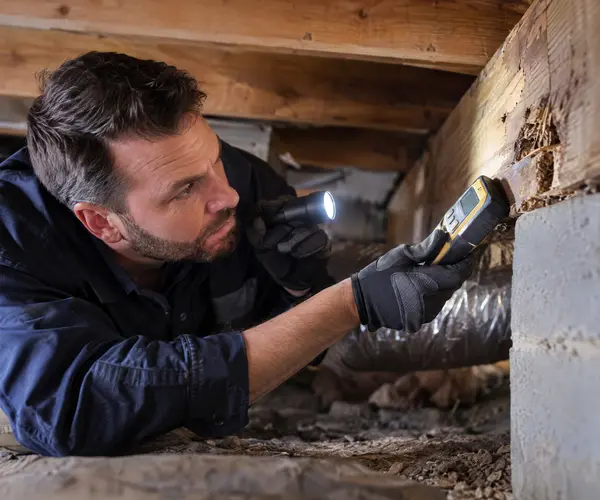 Termite InspectionA full check of the house, subfloor, roof void and garden for termite activity, with a written report and clear next steps.
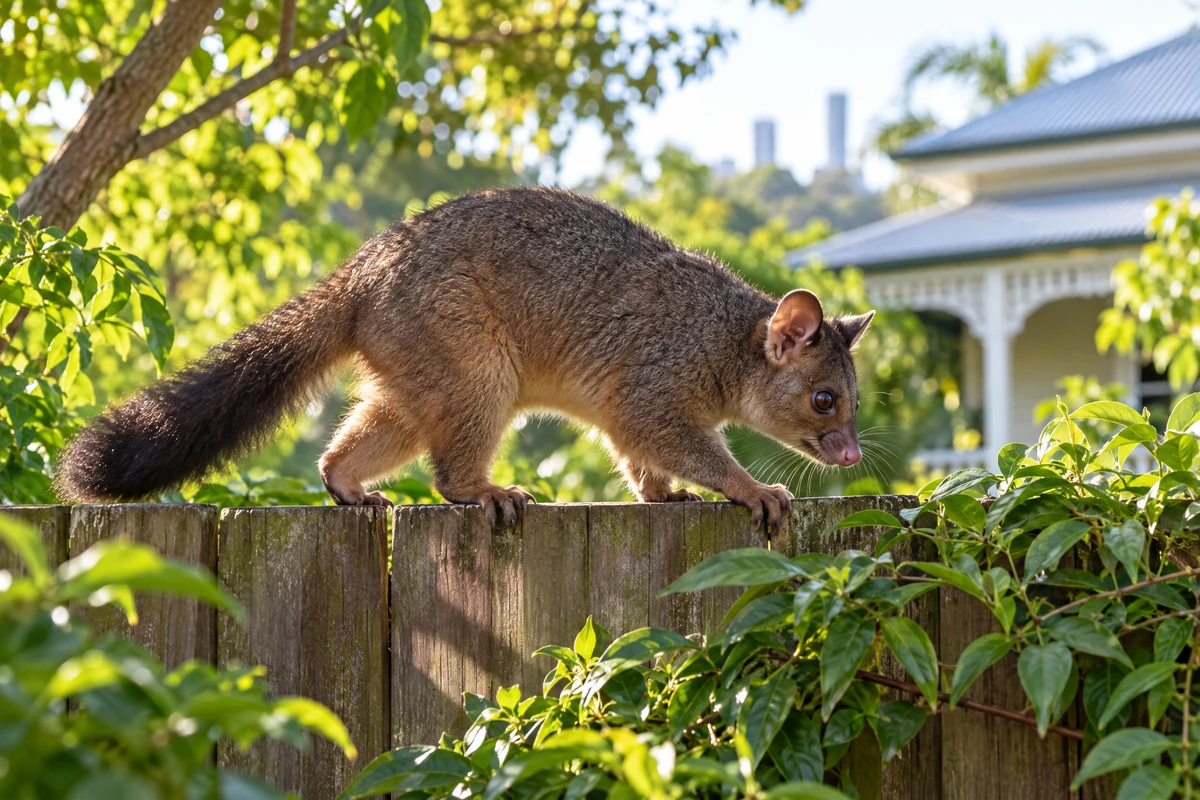 Possum RemovalHumane removal of possums from roofs and wall cavities, followed by proofing so they cannot move back in.
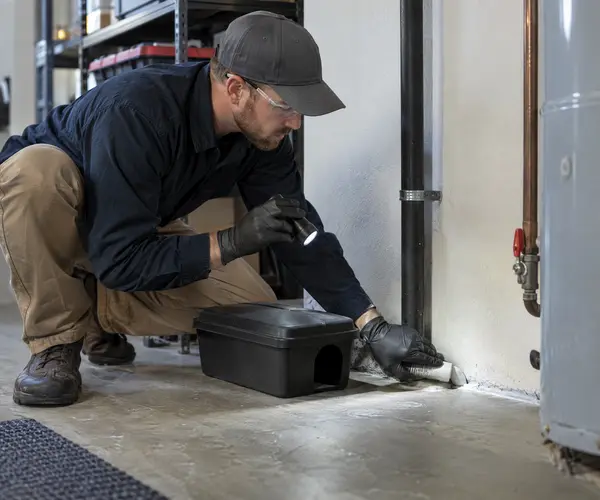 Rat & Mouse ControlBaiting, trapping and entry-point sealing to clear rats and mice from roofs, walls, kitchens and sheds.
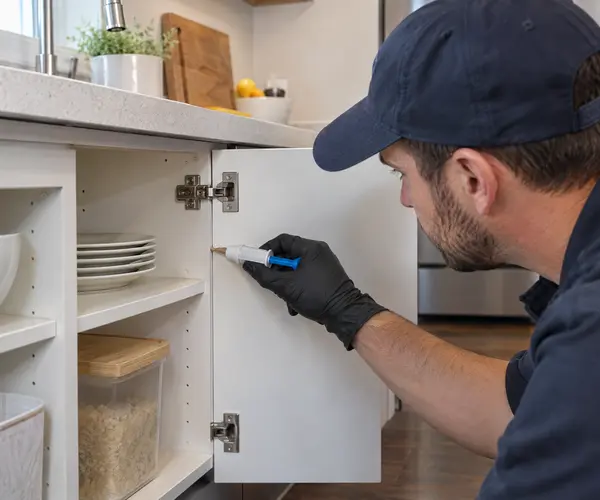 Cockroach ControlGel baiting and targeted spraying for German and large cockroaches in kitchens, bathrooms, roof voids and drains.
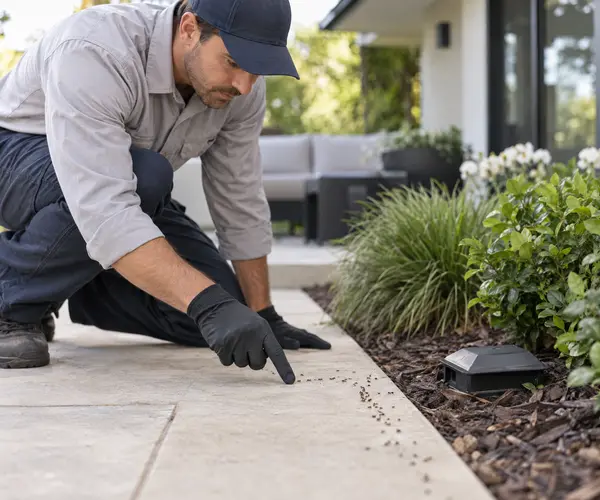 Ant ControlBaiting and barrier treatments that reach the nest, for ants in kitchens, wall cavities, paving and lawns.
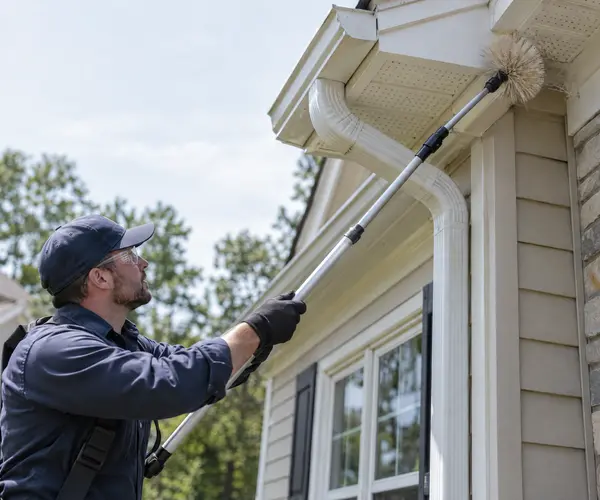 Spider ControlTreatment of webs, eaves, fences, subfloors and garden edges to bring spider numbers down around the home.
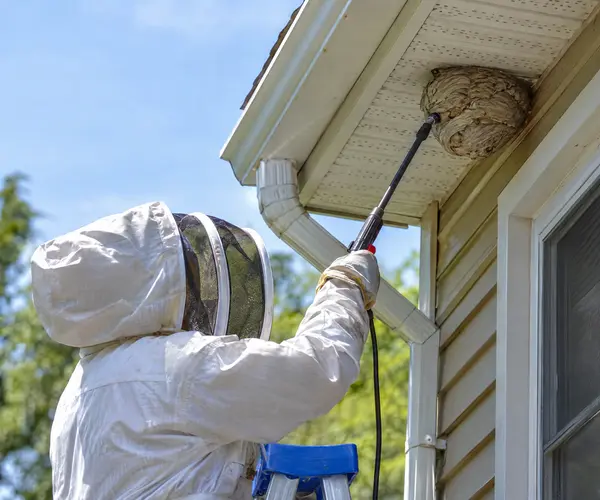 Wasp RemovalTreatment and removal of wasp nests from eaves, wall cavities, roof voids, trees and the ground.
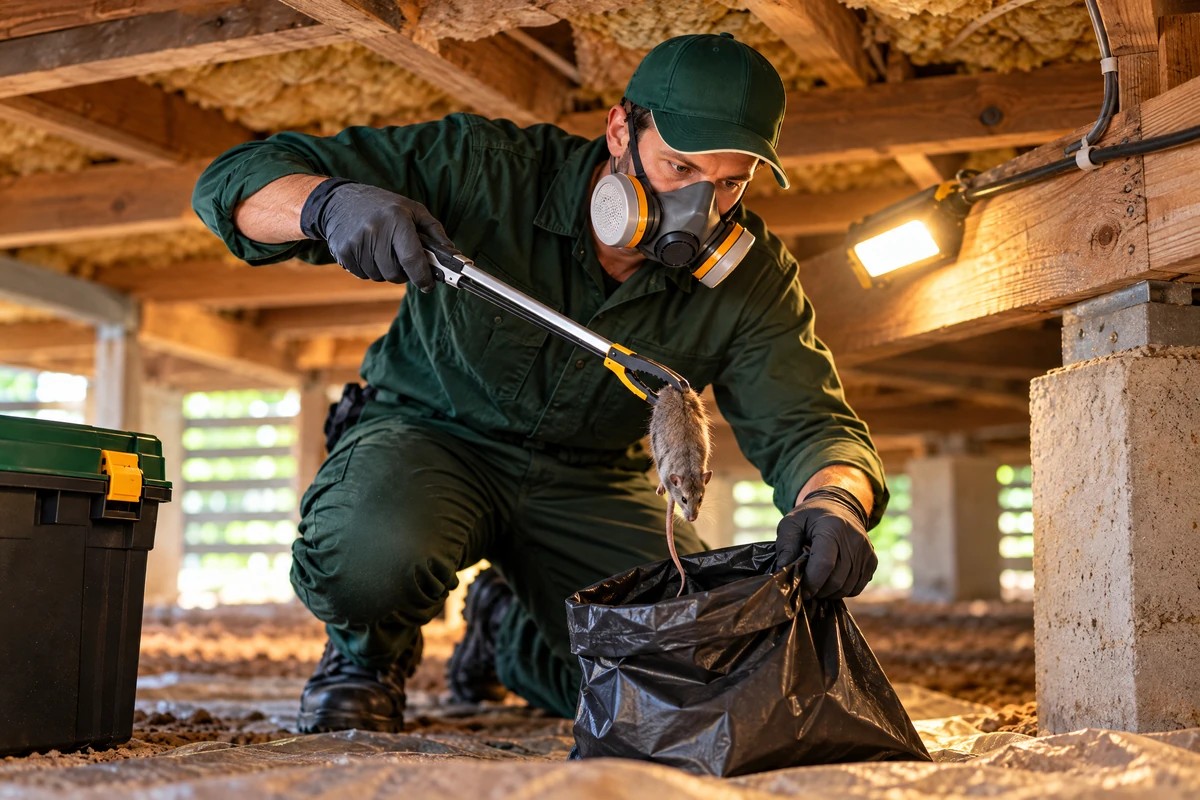 Dead Animal RemovalLocating and removing dead rats, possums and other animals from roofs, walls and subfloors, then deodorising the area.
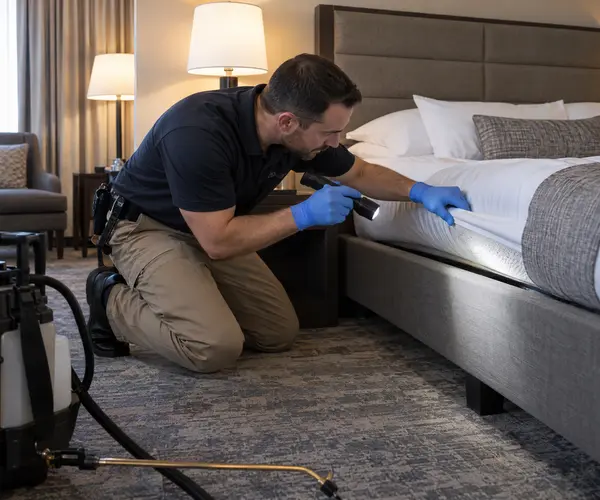 Bed Bug TreatmentInspection and treatment of beds, bed frames, couches and skirting boards to clear bed bugs and their eggs.
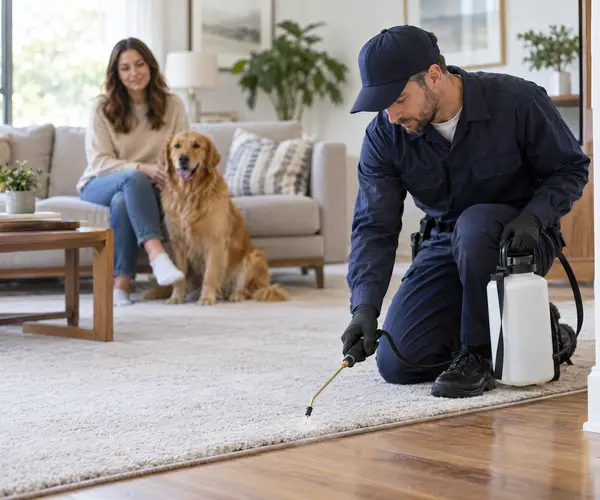 Flea TreatmentInside and outside flea treatment for carpets, pet bedding areas, yards and subfloors, with a follow-up when needed.
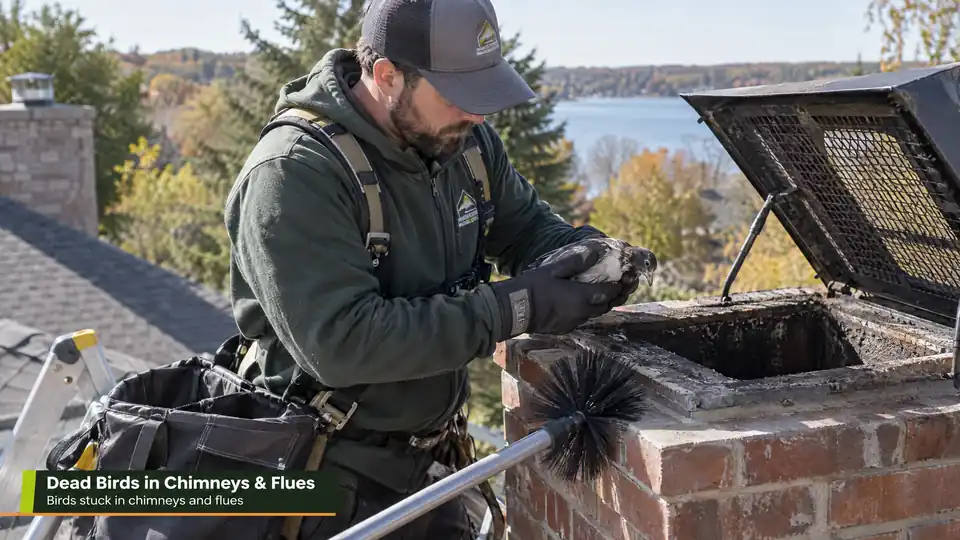 Bird ControlBird proofing with spikes, netting and mesh to keep pigeons, mynas and starlings off roofs, balconies, solar panels and signs.
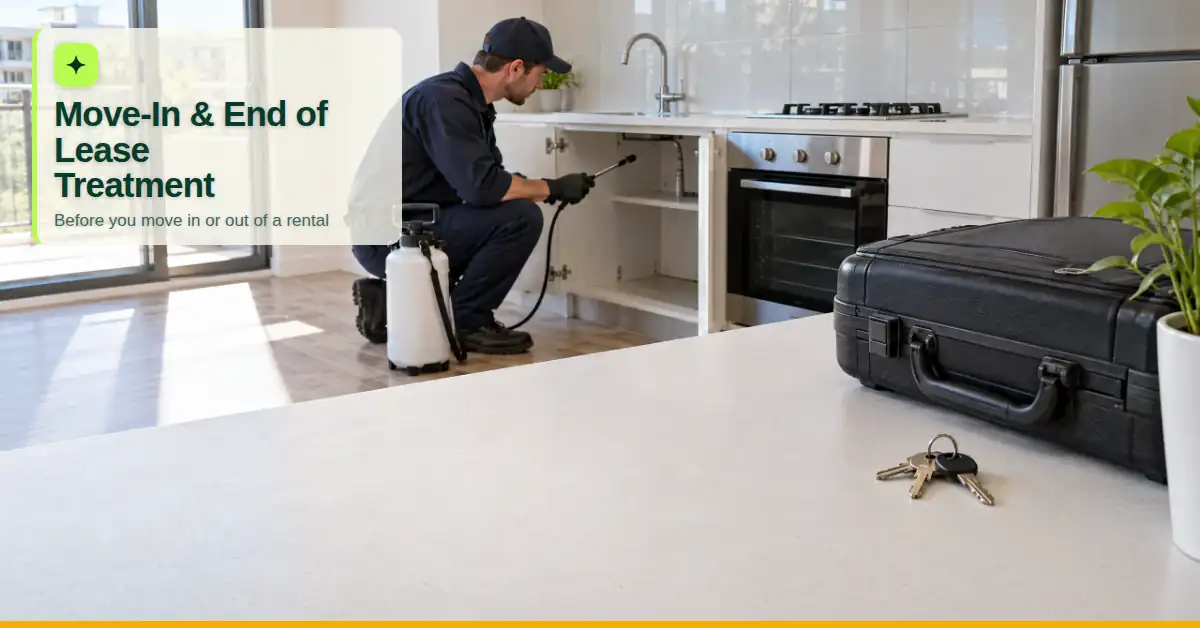 End of Lease Pest ControlInside and outside pest and flea treatment when you move out, with a written record for your agent or landlord.